Merchant City
The Vibe
Glasgow's 18th-century warehouse district reborn — Georgian counting houses holding cocktail bars, LGBTQ+ venues, and gallery restaurants in a compact, walkable grid.
Description
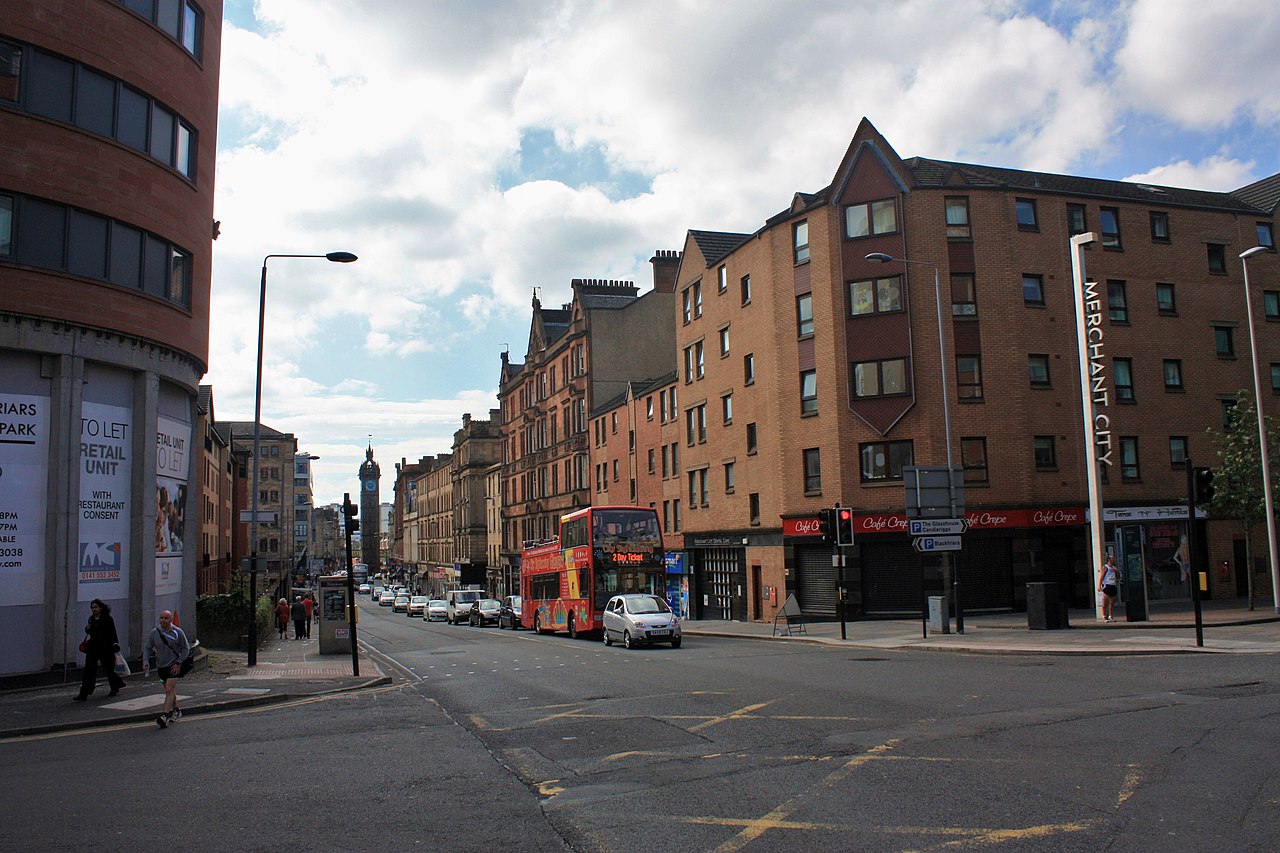
Merchant City is the neighbourhood where Glasgow's 18th-century mercantile wealth was made and displayed — a grid of Georgian and Victorian warehouse buildings immediately east of George Square that was transformed from derelict commercial premises into one of Britain's most successful urban regeneration projects between the 1980s and 2000s. The district takes its name from the tobacco lords, sugar merchants, and linen traders who built their fortunes here in the century following the Acts of Union (1707), constructing grand townhouses and trading premises along Ingram Street, Miller Street, and Wilson Street whose fine proportions and quality stonework still define the neighbourhood. Today, Merchant City's converted warehouses and counting houses house a concentration of independent restaurants, cocktail bars, art galleries, boutique hotels, and performance venues that make it one of Glasgow's most culturally and gastronomically rich districts. The neighbourhood's compact scale — everything of interest is within a 10-minute walk — and its grid of pedestrianised lanes make it exceptionally navigable on foot. The Italian Centre (1991), a designer retail complex in a converted 18th-century warehouse, was the architectural statement that announced Merchant City's commercial ambitions to the world. Merchant City is also Glasgow's LGBTQ+ village — the 'Pink Triangle' centred on Virginia Street and Glassford Street contains Glasgow's most celebrated gay bars, clubs, and restaurants, making the neighbourhood one of Britain's most inclusive and socially diverse urban villages. The Scotland Street School Museum (Charles Rennie Mackintosh's 1906 building) is a short walk away, and the Gallery of Modern Art on Royal Exchange Square forms the neighbourhood's cultural anchor.
Neighborhood Stats
Popular With
- LGBTQ+-travelers
- culture-seekers
- foodies
- architecture-lovers
- nightlife-seekers
- couples
- art-enthusiasts
Key Attributes
- historic-warehouses
- Georgian
- LGBTQ+
- gallery-of-modern-art
- restaurants
- cocktail-bars
- regeneration
- compact-walkable
Food Scene
Hutchesons City Grill (158 Ingram Street) is housed in Glasgow's most beautiful former hospital building — a grand restaurant serving Scottish steaks, lobster, and seasonal Scottish produce in one of the city's most architecturally spectacular dining rooms. The Corinthian Club (191 Ingram Street) occupies a magnificent Victorian banking hall with a 1907 stained-glass dome — now a restaurant-bar serving classic Scottish brasserie cuisine amid extraordinary architectural grandeur. Bar 91 (91 Candleriggs) is a Merchant City institution for pre-theatre drinks and contemporary Scottish bar food. Ingram Street is lined with independent cafés, delis, and brunch restaurants serving the neighbourhood's creative working population.